

 Massachusetts Health & Hospital Association
 Hospitals United; Modernizing the Benchmark
INSIDE THE ISSUE
> Modernizing the Benchmark
> Code Black
> A Return to Chap. 58’s Values
> House Ways & Means’ FY27 Budget
> New Equity Reporting
> Transition at HCFA
MONDAY REPORT
Benchmark Stays at 3.6%; Calls for Modernization Dominate Vote
The Health Policy Commission (HPC) has voted to keep the state’s healthcare cost growth benchmark at 3.6%, but in recognition of comments and concerns from stakeholders across the healthcare landscape, commissioners and HPC staff concluded it may be time to “modernize” how the benchmark is arrived at and used.
Last Wednesday’s full commission meeting followed an HPC hearing earlier this month with members of the legislature’s Joint Committee on Health Care Financing to discuss where the benchmark should be set. That meeting focused almost entirely on the rising unaffordability of healthcare and what role the benchmark has in that debate. While healthcare spending has exceeded the 3.6% benchmark in recent years, that spending usually is close to the state’s economic growth. The disconnect between actual growth and the static benchmark has led to many – including MHA and HPC commissioners – to say its time to modernize the benchmark that was created under Chapter 224 in 2012.
HPC Executive Director David Seltz said the HPC is not averse to tweaking the benchmark, noting that the commission suggested to the legislature in 2023 ways that it could be improved, including factoring in the specific populations that providers serve, and developing actual affordability and equity benchmarks within the overall benchmark. Last Wednesday, Seltz said the HPC would revisit those recommendation and develop a new set of modernization suggestions in consultation with those in the healthcare sector and with the governor’s Health Care Affordability Workgroup.
HPC Commissioner Keith Marzilli Ericson, the economist who is a professor at Boston University’s Questrom School of Business, discussed his own research on the healthcare spending issue. “Over the 10 years that Massachusetts has been measuring spending against its cost-growth benchmark, the commonwealth has succeeded in keeping healthcare costs from growing faster than the economy,” Ericson wrote. “… I keep hearing the phrase ‘unsustainable growth.’ But the growth Massachusetts has actually experienced 2013-2023 is sustainable. It is not out of line with the growth of income in the commonwealth.”
Affordability, he added, is a separate question from cost growth spending and is, indeed, “a serious problem. The problem is not that spending in aggregate is outpacing our ability to pay. The problem is that particular parts of the system are not working well, and they are creating real hardship for particular families.”
MHA’s Senior Vice President of Healthcare Finance & Policy Dan McHale, who has long advocated for reshaping the benchmark process, said of the HPC vote, “We are grateful for the HPC’s openness to a modernized benchmark, which we believe can serve as an even stronger tool in evaluating healthcare’s performance against ever-changing economic conditions. With major coverage losses slated to shake our healthcare system in the near future, there is a clear and urgent need to address the root drivers of today’s cost and affordability issues before they intensify further – all while protecting patients and the institutions that meet their needs every day. Alongside the HPC, policymakers, and sector partners, our hospitals and health systems are committed to leading the type of sustainable, innovative change that today’s patients and providers deserve.”
When One Hospital is Affected, All Stand Ready to Respond
The recent “Code Blacks” declared at two hospitals disclosed how when one part of the healthcare system is met by a destabilizing event such as a fire or cybersecurity incident, surrounding hospitals immediately swing into action to ensure patient care continues seamlessly.
Signature Healthcare Brockton Hospital responded to a cybersecurity issue on April 6, affecting its communications and data transfers. The facility immediately activated its incident response protocols and declared Code Black, which usually means that all non-emergency and outpatient procedures are halted and ambulances are diverted to other facilities. The hospital came off the code last Wednesday and began accepting ambulances as it continued to resolve all issues related to the attack.
BMC South, also in Brockton, accepted a large volume of diverted ambulances from Signature Brockton, followed by South Shore Health and Beth Israel Deaconess Milton. Patients were also diverted to Brown University Health’s Saint Anne’s Hospital and Southcoast Health’s Charlton Memorial Hospital, both in Fall River. All Massachusetts hospitals will continue to step up until Signature Healthcare Brockton’s full capabilities have been restored.
DPH’s Office of Preparedness and Emergency Management held regular calls with Region 5 hospitals, MHA, and others throughout the Brockton incident.
Last Wednesday, a fire broke out in an electrical room at BMC Brighton, resulting in the facility declaring a Code Black and transferring several dozen patients, including those in the ICU to other facilities. All affected patients were safely evacuated during the early morning to BMC Boston, and throughout the Beth Israel Lahey Health and Mass General Brigham systems, as well as to Tufts Medical Center. BMC Brighton came off Code Black over the weekend and if fully operational.
The Conference of Boston Teaching Hospitals (COBTH), working closely with the City of Boston’s Medical Intelligence Center, held calls to help coordinate the response as did the state and were on site in Brighton to help coordinate patient movement. Patricia (Tish) McMullin, COBTH’s executive director, said of the incident, “As we saw during previous public health and other emergencies, the entire healthcare system collaborates to respond quickly and efficiently with the overriding goal of ensuring that patients are cared for safely and compassionately. The response from leadership and staff at BMC Brighton and our neighboring hospitals was phenomenal, and the hospitals’ emergency preparedness efforts continue to pay off.”
Celebrating Chapter 58 and a Call for a Return to Its Values
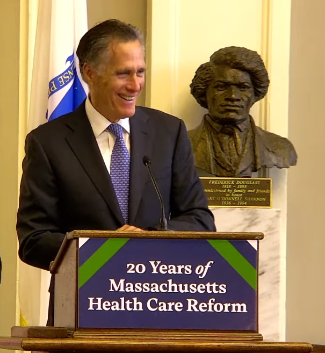
Last week’s 20th anniversary celebration of the passage of Chapter 58, the Massachusetts universal insurance coverage law, featured some familiar themes throughout the program. Comments from speakers, including some from the five current and past governors of the commonwealth, reflected longingly on a time when political opponents could come together to forge such a sweeping law. Many also noted that while such cooperation is rapidly evaporating from politics across the U.S., it is still achievable in the commonwealth as it attempts to tackle the still stubborn healthcare affordability and access issue.
Governor Maura Healey noted that the Healthcare Affordability Working Group she formed is poised to make the next large step to in the state’s healthcare reform journey. “The lesson of Massachusetts healthcare reform is that big changes require trust, and courage, and collaboration from everyone who has a stake,” she said. “On this anniversary, I am calling everyone here to help us meet the challenge once again … We are uniquely capable of solving big problems, we are uniquely dedicated to bringing world-class care provided by our doctors and our nurses to the people of our state, and we’re uniquely committed to broad, deep bipartisan civic participation by all.”
Panels that followed the speeches by the principals that were involved in crafting Chapter 58 (including former Governor Mitt Romney shown in photo), focused on how the law came about and the challenges that remain. One panelist, Thomas Dehner, Boston Medical Center’s executive director of Medicaid ACOs, offered some frank comments about the current state of the safety net in Massachusetts. Dehner was deputy Medicaid director for the state during the creation of Chapter 58 and then ran MassHealth during the law’s implementation.
“All of this fancy talk about the affordability standards and the broader picture – all of this is undergirded by support of the safety net under Medicaid and the Health Safety Net,” Dehner said. “And both of those things are under very direct threat right now in terms of Medicaid eligibility based on the new federal requirements, which we need to find a way to manage through by playing defense. The Health Safety Net is still needed even though we have universal coverage, but its finances – primarily because of coverage for people with immigration statuses that don’t allow them to be covered under [Chapter 58] is only to get extremely worse. I’m only saying what others already know, but it is going to require a return to the values of this whole program and it might not include a return to stuff only that we get federal financing for. I think we’re at a time where the state is going to have to decide whether it is going to step up irrespective of what the federal government is going to do.”
Massachusetts House Ways & Means Releases its 2027 Spending Proposal
The Massachusetts House Ways and Means Committee (HWM) released its FY2027 state budget proposal last Wednesday. The $63.3 billion spending bill is a $2.3 billion increase over the FY2026 General Appropriations Act (GAA) and is $29 million less than Governor Healey’s H.2. Notably, the HWM proposal allocates increased spending to housing, public safety, and MassHealth, resulting in reduced funding for areas such as local aid, support services, and transportation.
The HWM budget is supported by $71.38 billion in total revenues, driven primarily by the $42.2 billion non-surtax consensus revenue figure agreed upon in January by the Healey administration and House and Senate budget leaders. It also incorporates $2.7 billion in projected income surtax revenue. The House’s proposal is also supported by $15.86 billion in federal revenue and reimbursements, in addition to $9.58 billion from other revenues.
During a press conference last week, House Ways and Means Chair Rep. Aaron Michlewitz (D-Boston) acknowledged the challenges of crafting the budget and noted that the final version will likely look significantly different once signed into law. He pointed to growing uncertainty in Washington and shifting economic conditions and revenue projections as key factors. Additionally, he noted concerns about two state ballot initiatives that if approved in November would limit state collection through lowering the income tax and repealing the Fair Share Amendment.
The MassHealth budget totals $22.41 billion (gross), the largest spending area of the HWM draft. After accounting for federal reimbursements and other revenues, the net cost is $8.27 billion. The HWM MassHealth budget largely mirrors what the Healey administration proposed in H.2; it does not restrict the program from eliminating GLP-1 coverage and allows for the implementation of future recommendations from the Personal Care Attendant Working Group.
Updated Health Equity Data Standards Go Into Effect in 2028
The state has developed new standards to help measure and track healthcare inequities. The effective date of the new reporting is January 1, 2028, to give parties time to update their data collection practices and systems.
The Executive Office of Health and Human Services convened a new Health Equity Data Standards Technical Advisory Group to the Quality Measure Alignment Taskforce in 2025. The Advisory Group met six times to recommend updates to the Taskforce’s 2022 standards for the collection of data relating to a patient’s race, ethnicity, language, disability status, sexual orientation, gender identity, and sex. The taskforce then solicited public comment on the proposal before making it final.
The new reporting differs from the current reporting in a variety of ways, from, among things, changing the terms used to determine a person’s ethnicity and language preferences, to broadening the questions used to assess a person’s disability status. It is important to note that patients in all categories have the option of not responding to the questions. The state will be holding online sessions this summer to help organizations prepare for the new questions. MHA will provide more details about the changes to its membership this week.
Massachusetts hospitals have taken extensive steps to close care disparities in recent years through the nation-leading Hospital Quality and Equity Incentive Program, which includes the collection of patients’ demographic and health-related social needs. Massachusetts is the first state in which every hospital has earned the Joint Commission’s Excellent Health Outcomes for All Certification, which recognizes hospitals’ rigorous commitment to improving care access and closing longstanding disparities across patient populations.
Transition
Jennifer Lemmerman has been named the new Executive Director of Health Care For All, effective May 11. She most recently served as chief policy officer for Project Bread. Lemmerman previously held roles with longtime HCFA collaborator Community Catalyst and as an elected alderman in Melrose. Lemmerman earned her master’s in social work from Boston College and her bachelor’s in social work from the University of Vermont. HCFA was last led by Amy Rosenthal, who served as the executive director since 2017, and left last November to become an undersecretary in the Executive Office of Health and Human Services.