

 Massachusetts Health & Hospital Association
INSIDE THE ISSUE
> Affordability Talks in D.C.
> Medicaid Fraud Hearing
> MHA’s FY2027 Budget Letter
> Medical Debt Erased
> Sepsis & Coding
> Preparedness Tiering
> ARPA-H in Massachusetts
> Transition
MONDAY REPORT
Healthcare Affordability Hearing Series Turns to Providers
The U.S. House Energy and Committee Subcommittee on Health began a series of healthcare affordability hearings earlier this year initially focused on insurers and then drug and device manufactures. Last Wednesday, leaders from the hospital and physician communities were the key witnesses as the committee examined healthcare provider-related costs.
The discussion ranged from provider financial challenges and workforce shortages to a broad list of other issues, including health system consolidation, price transparency, Medicaid work requirements, site neutrality, and the 340B program. The political split found Democrats focused on the affordability impacts of the One Big Beautiful Bill Act (OB3) and Affordable Care Act (ACA) subsidy changes, while Republicans emphasized structural issues like hospital pricing and consolidation.
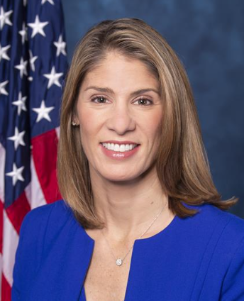
Committee member Representative Lori Trahan (D-Mass.) noted the heavy cost pressures hospitals and health systems face, which are expected to increase dramatically as provisions of OB3 become effective.
“We’ve got new Medicaid eligibility requirements, mandated paperwork requirements, six-month redeterminations, limits on provider taxes and state directed payments, the expiration of enhanced ACA premium tax credits, reduced [National Institutes of Health] funding, changes to H-1B visas, and I could actually keep going,” Trahan said. “These changes put enormous pressure on state healthcare systems and they force states into impossible choices, reducing services, cutting provider rates, restricting eligibility for coverage. In Massachusetts, officials estimate the bill could cost the state three and a half billion dollars annually in federal health funding and leave up to 300,000 of our residents without coverage. Now, as all of you know, when people lose coverage, they don’t disappear from our healthcare system. They still get sick, they still get injured, and they still show up in emergency rooms and safety net hospitals, an issue that’s projected to increase demand on the Massachusetts Health Safety Net by an estimated $550 million by Fiscal Year 2028.”
Trahan’s safety net concerns, as well as the specter of increased pressures on hospitals, were echoed in the letter MHA sent last week to Massachusetts legislators, who are currently crafting the state’s FY2027 budget (see related story below).
American Hospital Association (AHA) President Rick Pollack outlined the efforts hospitals are making to reduce costs but told Trahan the task is made harder by the increasing pressures put upon them.
“There’s no question that there are going to be clogged emergency rooms, as we are the family doctor to the uninsured, and there will need to be some changes in terms of the array of services that are provided,” Pollack said. “… We have been very open to the fact that between regular chronic government underpayment for Medicare and Medicaid, combined with an increase in the amount of charity care that is going to be provided, there’s a care shift, and that affects the private sector.” Pollack added that because hospitals have to ”stay whole to provide 24/7 coverage,” government underpayments inevitably lead to rising costs of private health insurance.
House Hearing on Medicaid Fraud
On March 17, the House Committee on Energy and Commerce Subcommittee on Oversight and Investigations held a hearing to examine the Centers for Medicare & Medicaid Services’ (CMS’) actions to address fraud across the Medicare and Medicaid programs; the available authorities, tools, and approaches for CMS to detect, prevent, or remedy fraudulent claims and payments; and whether CMS’ recent enforcement actions are appropriately targeting fraud in these programs.
Republicans emphasized the need to address fraud in claims for durable medical equipment, genetic testing, skin substitute products, home health, and hospice services. Democrats expressed support for addressing fraud and criticized the Trump administration for what they said was politicizing the anti-fraud efforts and targeting Democratic-led states, including Massachusetts.
The lone witness, Kimberly Brandt, deputy administrator and chief operating officer of CMS, focused on describing CMS’ new approaches to detecting and preventing fraudulent claims and defended CMS’ recent enforcement actions as data-driven, fact-based program integrity actions.
Massachusetts Representative Lori Trahan (D) questioned why the president in January 2025 fired the U.S. Health & Human Services Inspector General, along with 16 other IGs, and replaced them with what she termed “partisan loyalists.” She also noted several pardons the president has granted to people who were convicted and sentenced to prison for incidents of massive Medicare and Medicaid fraud.
“Protecting Medicare and Medicaid from waste, fraud, and abuse is one of the most important things this committee can do,” Trahan said. “If this committee is serious about that effort, we’re here to work together on strong solutions like strengthening provider screening in Medicaid, addressing how some Medicare Advantage insurance gained this payment structure by over diagnosing patients to inflate reimbursements, and targeting the areas experts have flagged as the highest risk – not what we’re doing by targeting Democratic states.”
On related action, the administration announced on March 16 a government-wide task force to fight fraud to be chaired by Vice President JD Vance.
MHA to Ways & Means Committees: Assistance Needed
As the Massachusetts House and Senate continue their efforts to craft an FY2027 state budget, following up on Governor Maura Healey’s budget proposal filed in January, MHA sent a letter last week to legislators outlining the hospital community’s concerns and suggestions.
As was mentioned last week in healthcare affordability hearings in Washington, national and state healthcare systems are facing strong headwinds from the One Big Beautiful Bill Act that was enacted last year. The coverage losses and funding cutbacks that will occur as a result of OB3 in 2027 come on top of current funding difficulties.
In its letter to House and Senate Ways & Means chairs and ranking members, MHA notes that the Center for Health Information and Analysis found that 61% of acute care hospitals reported negative operating margins in FY2024, resulting in a statewide median operating margin of negative -2%. Factoring in hospital affiliated physician groups, 74% of hospital health systems – which include affiliated physician practices – reported negative operating margins, with these systems losing $1.4 billion collectively on operations in FY2024. In 2027, 300,000 people are expected to lose health coverage, which will put additional pressures on the Health Safety Net that is already reeling as it absorbs the costs associated with 36,000 ConnectorCare Type 1 enrollees that lost coverage this January 1.
In its letter, MHA also outlined a series of legislative proposals now pending – relating to Emergency Medical Services transportation, legal decisions-making guidelines to speed care transitions, prior authorization interventions, ED crisis evaluations, and much more – all designed to incrementally lower costs.
Fund Reduces Medical Debt for Thousands in Massachusetts
The issue of healthcare affordability and medical debt has been resolved in the most direct way possible for nearly 30,000 Massachusetts residents whose debt will be erased either partially or completely thanks to a $42.3 million initiative from the Atrius Health Equity Foundation.
“Medical debt hurts people, hurts families, hurts our state’s financial and economic stability, and makes people sicker because they don’t get the care they need,” said Dr. Ann Hwang, president of the Atrius Health Equity Foundation. In June 2022, the Atrius Health Equity Foundation was funded by the conversion of Atrius Health into a for-profit corporation. The foundation now operates and is governed independently of Atrius Health.
According to a press release from the foundation, a total of 27,129 low- and middle-income residents began receiving letters in the mail last week from the national non-profit, Undue Medical Debt. They will include 19,897 residents of Barnstable County, 1,856 residents of Plymouth County, and 1,394 residents of Middlesex County. Additional recipients are from Bristol, Dukes, Essex, Nantucket, Norfolk, and Suffolk County. The average debt per recipient is $1,560.28, and individual debt amounts range from $50 to $100,000. Atrius Foundation and Undue Medical Debt partnered with local health providers and others partnered to provide the relief.
“Massachusetts healthcare providers are proud to be a part of the solution when it comes to the growing challenge of medical debt,” said Steve Walsh, MHA president and CEO. “This is exactly the type of partnership and investment that can help alleviate the pressures on patients. We are grateful for the leadership of the Atrius Health Equity Foundation and Undue Medical Debt and look forward to seeing efforts continue across the commonwealth.”
There is no application process for debt relief, and it cannot be requested. Patients must meet certain income criteria and are automatically selected. Last week’s announcement is part of the plan to eliminate medical debt across Eastern Massachusetts.
The Complexity of Sepsis & Coding
As policymakers and the public continue to stress the importance of addressing ever-increasing healthcare costs, each aspect of care is under the microscope, from government reimbursements, workforce shortages, care transitions, and, as most recently discussed in a Boston Globe article last week, how providers and insurers navigate disputes over coding and the use of artificial intelligence to resolve those disputes.
That conflict is epitomized by the tug-of-war between hospitals and insurers over coding for sepsis and a fundamental disagreement over how “sick” a patient must be to justify a sepsis diagnosis.
At the heart of the increasingly complex issue is a shift in clinical definitions that has turned into a financial weapon for insurers and a compliance nightmare that hospitals have been flagging the issue over the past several years.
The problem stems from a lack of a single, universally accepted definition for sepsis. Hospitals generally use a broader definition to ensure early treatment, while many insurers have pivoted to a narrower definition that doesn’t recognize the claim as sepsis and which results in lower reimbursement. In addition to varying definitions, health plans may use multiple vendors for utilization management and payment integrity, resulting in multiple different definitions for denials.
Insurers are increasingly using AI to review claims and to conduct post-payment audits to review medical records. If a patient was diagnosed with sepsis by a doctor but doesn’t meet the insurer’s specific criteria, the insurer “downgrades” the code and demands a refund of the price difference. Insurers claim that providers use AI to skim through their claims to “upcode” them.
The “version” of sepsis used determines whether a hospital gets paid for a high-severity case or a standard infection. A Sepsis-2 diagnosis means a patient has an infection plus two symptoms – such as fever or a high white blood count, among other signs. Sepsis-3 combines an infection with a life threatening organ dysfunction.
A patient with a UTI, fever, and high heart rate meets Sepsis-2 criteria. A hospital will bill for sepsis. However, if there is no organ failure (like kidney injury or respiratory distress), the insurer applying Sepsis-3 will deny the claim, arguing the patient only had a simple infection. Doctors, whose main priority is the immediate needs of their patients, argue that waiting for organ failure (Sepsis-3) to diagnose a patient is dangerous. By the time Sepsis-3 criteria are met, the patient is already in a life-threatening state. Clinicians use Sepsis-2 to catch and treat the condition before it escalates.
Sepsis care has been a longstanding point of focus for the Massachusetts hospital community. MHA is a member of the Massachusetts Sepsis Consortium that works to raise awareness among patients and caregivers about the dangers of sepsis. Nationally, the Centers for Disease Control and Prevention has released sepsis “core element” strategies to assist hospitals, and national bipartisan legislation has also focused on educating clinicians about sepsis.
“While clinical advances have been made, the contentious problems of how to diagnose, code, and reimburse for certain care services continues to plague the healthcare system,” said Karen Granoff, MHA senior director of payer relations and managed care policy. “Commercial sepsis denials are clinical disagreements, not coding errors. To resolve those disagreements we need to consider aligning sepsis definitions across all payers and use human interaction – not just AI – for addressing these disputes. Technology should be used as a shared resource to the benefit of every patient who receives care.”
State Turns Corner on Respiratory Season
The Department of Public Health, noting “stable hospital capacity” due to the decline in respiratory viruses, has moved state Regions 1 and 2 to Tier 1, and Regions 3, 4, and 5 to Tier 2. The tiering of regions originally began in 2020 during the pandemic and mainly influences how often regional coordinating calls between acute care hospitals are held.
Tier 1 means regional coordinating calls are paused, while Tier 2 means the meetings will occur monthly. Hospital occupancy data, disease metrics, direct and indirect feedback from hospitals, and other capacity factors will continue to be monitored, and the tiers will be re-evaluated as necessary. This Capacity Planning and Response Guidance provides further details of the tiering.
While things may be turning the corner on respiratory virus caseloads, hospitals across Massachusetts continue to report capacity constraints driven by the inability to discharge patients to other care settings, treating an older and sicker population in need of longer stays, and workforce shortages in key patient-facing roles, among other factors.
ARPA-H Will Continue Its Presence in Massachusetts
The Trump administration, which had voiced concern about the operation of the Biden-era Advanced Research Projects Agency for Health (ARPA-H) Investor Catalyst Hub in Massachusetts, has recommitted to its presence in Massachusetts and connection to the strong life sciences and healthcare ecosystem here.
Earlier this year the administration issued a stop-work order and has terminated its agreement with the Massachusetts-based VenureWell – the consortium management firm in charge of the Investor Catalyst Hub. The state’s Congressional delegation objected to the sudden decision and pressed for answers.
This month ARPA-H reaffirmed its commitment to maintaining a physical presence in Massachusetts, which led to the delegation members issuing a statement welcoming the change in direction and adding, “Massachusetts is home to the world’s most dynamic life sciences and biotechnology ecosystem, and the Investor Catalyst Hub was located here precisely because of that unmatched concentration of research institutions, hospitals, and health innovators. The federal government has invested $1.5 billion in ARPA-H for fiscal year 2026 alone, and the work being done here – from improving cancer surgery to expanding hospital-level care in rural communities – represents years of progress that cannot be allowed to stall. These are not abstract research projects. They are real pathways to treatments and cures for the American people. We will continue to monitor this situation closely and push back against any effort – whether through stop-work orders, funding cuts, or administrative action – that threatens to undermine ARPA-H’s mission or our commonwealth’s role in carrying it out.”
Transition

Stephen Chandler has been named the new president of Winchester Hospital. He most recently served as CEO of HCA Healthcare Summerville Hospital in South Carolina. Prior to that role, he held executive leadership positions at HCA Healthcare’s Henrico Doctors’ Hospital and LewisGale Hospital Montgomery, both located in Virginia.
Before joining HCA, Chandler held a number of leadership roles in healthcare organizations, including as chief strategy officer at The Hospitals of Providence – Transmountain Campus in El Paso, Texas. He began his career in healthcare at Willis-Knighton Health System in Shreveport, Louisiana. Chandler earned a Bachelor of Arts in political science from Louisiana State University and Master of Business Administration from Baylor University.