Massachusetts Health & Hospital Association
 Closing the Loop: How UMass Memorial Health Built Surveillance Programs for Aortic Aneurysms, Adrenal Nodules, and Spine Care

November 19 | 12:00 pm – 1:00 pm
Incidental findings like aortic aneurysms and adrenal nodules show up on imaging every day, and many patients never get the follow-up they need. At UMass Memorial Health, a surveillance program driven by Natural Language Processing (NLP) has screened nearly 8 million radiology reports since 2021 and brought more than 500 patients with abdominal aortic aneurysms into guideline-based care. Two-thirds of them had never been followed at all. The program has produced more than 1,100 new clinic visits, over 1,000 follow-up imaging studies, 52 aneurysm repairs, and $3.6 million in direct contribution margin, with those results published in the Journal of Vascular Surgery.
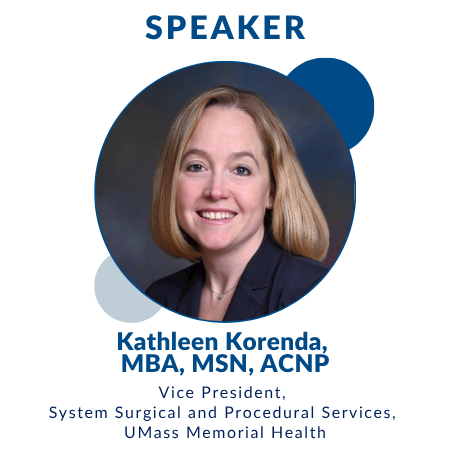
In this session, UMass Memorial Health shares how it built the program with Illuminate and extended the model to thoracic aortic aneurysms, adrenal nodules, and spine care. You’ll hear how the team finds patients in radiology and EMR data, assigns clinical ownership for follow-up, brings lost patients back into care, and scaled the program to a newly acquired community hospital, where it delivered five aneurysm repairs in the first 15 months.
Audience takeaways
- Apply a practical framework for finding, tracking, and closing the loop on incidental findings and other at-risk patients, from the radiology report to the right specialist.
- Identify the operational elements that sustain a surveillance program: clinical ownership, navigation workflows, and service-line partnership across a multi-hospital system.
- Measure program impact the way UMass Memorial Health does, through re-engaged patients, follow-up imaging, clinic visits, and procedures, and use those results to make the case for growth across service lines.