

 Massachusetts Health & Hospital Association
 Addressing Violence; Guidance on ICE
INSIDE THE ISSUE
> Guidance: Healthcare & ICE
> Ending Healthcare Violence
> AG Campbell Sues UnitedHealthcare
> Caution on IV Tubing
> INNOVATION SERIES: Merrimack Health
> Transitions
MONDAY REPORT
Governor Issues Health Facility Guidance on Interacting with ICE
Governor Maura Healey last Thursday released guidance on how healthcare providers and other entities should interact with U.S. Immigration and Customs Enforcement (ICE) agents that arrive at their sites.
The guidance for schools, childcare providers, colleges and universities, hospitals and healthcare providers, and places of worship follows the governor’s Executive Order No. 650 issued in January. That order prohibited any executive department office or agency from signing any new so-called 287(g) orders, which essentially allow state and local agencies to act as immigration enforcement agents. The order also prohibited civil arrests by federal immigration officers in non-public areas of state facilities, except when authorized by a judicial warrant or judicial order; and prohibited certain state facilities from being used as staging areas or for processing by ICE.
The healthcare guidance issued last week essentially encourages healthcare staff to not physically interfere with federal immigration officers, but to “feel empowered to excuse themselves and/or seek assistance from a supervisor/manager or administrator on call.” The guidance stresses that patient care should take precedence and that health staff should not allow federal immigration officials to influence the provision of that care.
“Detainees are entitled to discuss protected health information with staff outside of the earshot of Federal Immigration Officers,” the guidance reads, and staff should keep clear documentation of all of their interaction with the federal officials.
“People in Massachusetts should be able to live their lives — go to school, drop their kids off at childcare, see a doctor — without fear. That is fundamental,” the governor said. “We are setting clear expectations so providers know how to respond, how to protect their communities, and how to keep their doors open to everyone who needs care and support.”
The guidance notes that federal immigration officers do not have the right to enter non-public parts of a facility unless they have a judicial warrant or judicial court order. The guidance encourages health facilities to designate public and non-public areas and “enact policies establishing requirements for patients and/or visitors in said areas.” The guidance reads: “For example, a waiting area at a healthcare facility can be open to the public or can be limited to patients and those accompanying them, and there can be a posted policy requiring all visitors, including immigration and other law enforcement officials, to sign in.”
“In Massachusetts, we’re protecting every community member’s access to healthcare,” said Health and Human Services Secretary Kiame Mahaniah, M.D. “People should never have to choose between their health and their safety, and deferred medical care because of immigration-related fears will only put greater strain on our health system down the line. This guidance provides assurance that residents across our state can continue to access healthcare and live healthy, full lives.”
June 5: National Day of Awareness to End Violence
For the past 10 years, the American Hospital Association’s #HAVhope Friday has focused attention on how hospitals and health systems are addressing violence in their workplaces and communities. This year, the annual day of recognition falls on this Friday, June 5.
In response to the increased risk of violence in healthcare settings, MHA’s Healthcare Safety and Violence Prevention Workgroup developed guidance in 2019 to help healthcare facilities use evidence-based practices to create effective healthcare violence prevention programs. At the end of last year, that guidance was updated to offer new strategies for healthcare safety and violence prevention.
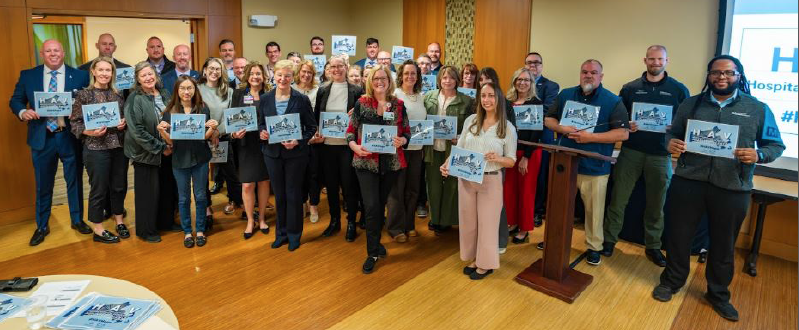
The statistics regarding violence in hospitals are disturbing. MHA’s survey of its membership shows that in 2025, every 38 minutes in a Massachusetts healthcare facility a hospital employee was either physically assaulted, endured verbal abuse, or was threatened. The significant rise of such incidents within healthcare organizations prompted MHA’s Board of Trustees to issue in 2023 a United Code of Conduct to foster safe, respectful workplaces for staff and healing environments for patients.
In the coming weeks, the most impactful steps Massachusetts can take to curb healthcare violence are contained in legislation that the Massachusetts House passed this session and which is now pending in the State Senate as H.4767, An Act Requiring Healthcare Employers to Develop and Implement Programs to Prevent Workplace Violence. The bill came about after more than a decade of competing but similar proposals were put aside and a unifying agreement was reached between MHA, the Massachusetts Nurses Association, and 1199SEIU Massachusetts.
The bill requires all hospitals to complete facility-specific risk assessments and implement comprehensive violence prevention programs tailored to those findings; and engage frontline staff in developing assessments and prevention plans, ensuring workforce-informed training, and making written plans available to all employees and labor organizations. The bill strengthens enforcement through DPH licensing requirements, regular reporting, and enhanced job protections for workers, including additional paid leave for employees who are assaulted.
While Senators have expressed their support for the bill, it is unclear when or if it will be taken up before the formal session ends at the end of June. MHA and the unions it worked with to craft the consensus bill say its passage is a top priority in the coming weeks.
Mass AG Sues UnitedHealthcare for $100 Million
Massachusetts Attorney General Andrea Joy Campbell last Friday filed suit in Suffolk Superior Court against UnitedHealthcare, alleging that the insurance company defrauded the state of at least $100 million.
The AG says United “falsely manipulated” the status of MassHealth members in its Senior Care Options plan, which serves individuals age 65 or older. SCO members receive a clinical assessment that places them in one of three levels of care from the least serious Level 1 (which receives the lowest payment rate) to the most serious and highest payment rate Level 3.
The lawsuit says United increased its profits illegally by categorizing some members as Level 2, which is reserved for members with behavioral health or substance use disorders. “United classified members by identifying, in its submissions to MassHealth, that members had diagnoses like depression or anxiety, even though those members lacked any corresponding diagnosis or treatment associated with behavioral health or substantive use disorders,” according to a media release from the AG’s office.
United also allegedly classified some members at Level 3 even though they did not qualify for such a level, and when United’s own internal review revealed the error, the insurer never revealed the improper higher payments it had been receiving.
“Third, United submitted assessments to MassHealth for members in the United SCO Plan that represented that those members needed daily skilled nursing services,” according to the AG. “Despite these representations, most of those members did not need or receive daily skilled nursing services. As a result, United received higher payments from MassHealth for these members than it should have.”
According to the lawsuit, “These misrepresented assessments have resulted in United receiving and retaining more than $100 million in fraudulent payments from MassHealth. These strategies were employed at the direction of senior United personnel and with full knowledge that the assigned levels of its enrollees were inflated.”
IV Specks Cause Concern
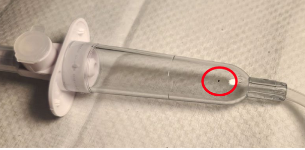
There have not been any serious injuries or deaths reported from the black particles showing up in certain IV tubing sets from the ICU Medical company, but the Food and Drug Administration and the Massachusetts Department of Public Health are nonetheless urging providers to be cautious.
ICU Medical sent out notice to its customers noting that some of its IV tubing contains black particles on the inner walls of drip chambers. The company is investigating whether the specks represent biological contamination or whether they could enter the fluid path.
In the alert it sent out last week, the FDA says any facility with ICU Medical IV tubing should inspect all the tubes, segregate any suspected of containing specks, and inform the company and the FDA through a MedWatch report.
Massachusetts Healthcare Innovations
The Commonwealth of Massachusetts is an innovation leader in a variety of fields from early manufacturing advances, to public education leadership, and, especially, groundbreaking healthcare discoveries.
Massachusetts hospitals and health systems have always led the way in creating lifesaving clinical procedures to innovative models of care delivery. And for 90 years, MHA has stood alongside its member organizations as they advance a legacy of innovation, driven by a shared commitment to improving patient lives, empowering caregivers, and strengthening communities.
In recognition of these innovations, MHA has compiled stories from hospitals and health systems across the state and will feature them on this webpage and periodically in Monday Report.

Merrimack Health: Reaching the Next Generation of Caregivers
In partnership with Top Notch Scholars, a Lawrence-based youth leadership nonprofit, Merrimack Health is hosting a series of healthcare panel presentations designed to introduce high school students to the wide range of career opportunities in the field.
Supported by the Atrius Health Equity Foundation grant, these panels bring together Merrimack Health professionals from both clinical and non-clinical roles to share real-world insights, personal experiences, and practical guidance. To date, more than 90 students from the city of Lawrence have attended.
Through this collaboration, students gain early exposure to careers they may not have previously considered, helping to broaden their perspective and open pathways into healthcare. At the same time, the initiative strengthens efforts to build a more connected, inspired, and locally rooted pipeline of future healthcare talent for the communities Merrimack Health serves.
Transitions
Julie Abilheira, R.N., the senior vice president of clinical services at Brown University Health, has been appointed president of the system’s Saint Anne’s Hospital in Fall River and Morton Hospital in Taunton. Morton president Heidi Taylor has been promoted to chief operating officer and chief financial officer at both hospitals. Abilheira replaces Carole Billington, the former president and chief nursing officer at Saint Anne’s Hospital. Brown University Health acquired Saint Anne’s and Morton from the bankrupt Steward Health Care in 2024.