

 Massachusetts Health & Hospital Association
New Report: Mass. Hospital Expenses Have Skyrocketed by 54% with Major Financial Disruption Still to Come
New analysis examines pressures threatening patient access and provider viability
BURLINGTON, MA – NOVEMBER 9, 2026 – The Massachusetts Health & Hospital Association (MHA) today released a new report, Critical Condition: How Mounting Hospital Pressures Put Patient Care At Risk, which found that patient care expenses for Massachusetts acute care hospitals have spiked by 54% since 2020.
Those dramatic increases, combined with the billions of dollars now at risk as a result of federal actions, are leading Massachusetts hospitals to make hard decisions, including reducing their workforce and even cutting service lines – all while the sector searches for meaningful affordability solutions.
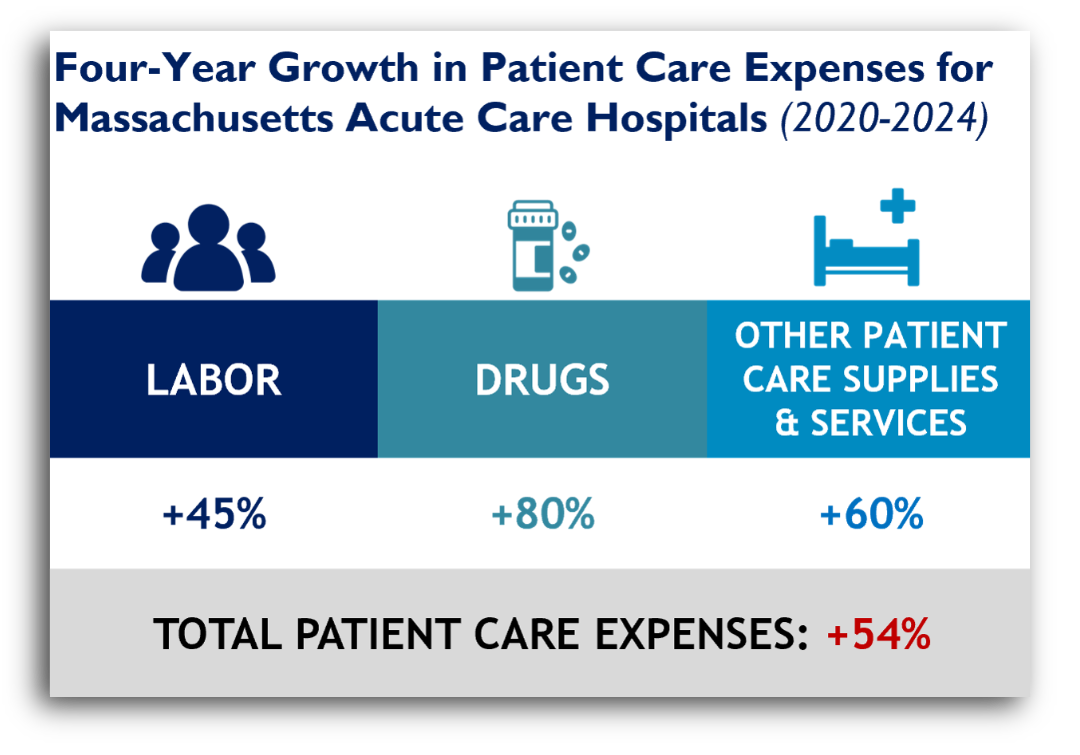
According to the MHA analysis of the Center for Health Information and Analysis’ (CHIA’s) cost report data, over a period of just four years labor costs for hospitals have risen 45%, drug costs have spiked by 80%, and the cost of all other patient supplies and services have risen by 60%. All totaled, the expenses hospital accrue to care for a patient have risen 54% since 2020.
While nearly all sectors of the Massachusetts economy have experienced increased expenses due to rising labor and supply costs, tariffs, and more, hospitals and health systems – which are usually the largest employers in their communities – are especially vulnerable to the enormous spike in input costs. Because these expenses are essential to maintaining patient care services, hospitals must absorb them to their own financial detriment, leading to the negative or razor-thin operating margins seen today.
The MHA report lays out the worsening strains that are affecting hospitals from multiple angles. While the report details some well-known pressure points that have consistently afflicted hospitals, Critical Condition shows how the compounding pressures can result in reduced access for patients and threatened viability for some providers.
“Our hospitals and health systems are heading down an unsustainable path, with very real consequences for those they care about the most: patients and workers,” said MHA’s Interim President & CEO Mike Sroczynski. “This is an important time for us to be painting a clear picture for the policymaking community. We know pharmaceutical costs are the greatest drivers of healthcare cost growth. We know that come January 1, the process begins where hundreds of thousands will lose coverage, which in turn will grow the Health Safety Net shortfall by $500 million unless drastic actions are taken. Those shortfalls, as has been well documented, are born entirely by hospitals.”
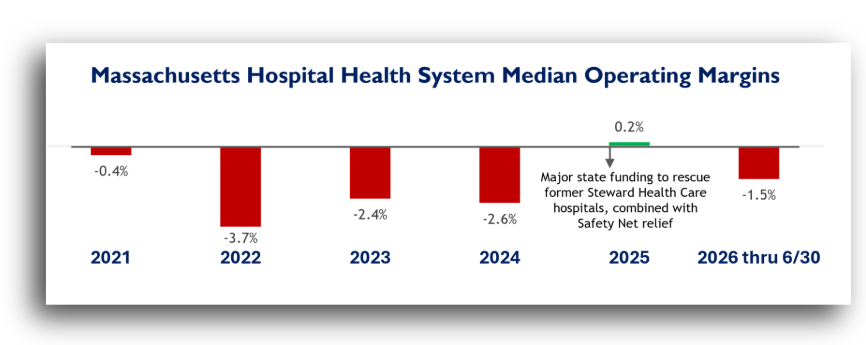
As a result of the worsening financial dynamics outlined in the report, the current median hospital health system operating margin in Massachusetts of negative 1.5% will only get worse. That negative margin demonstrates that patient care expenses are growing faster than the revenue health systems take in. Without a modest operating margin, hospitals often have little choice but to lay off staff and cut services.
The One Big Beautiful Bill (OB3) that will result in major coverage losses also affects revenue that hospitals have historically received, such as “State Directed Payments” that have allowed states to direct how Medicaid managed care organizations reimburse providers under certain conditions. The loss of that ability will remove up to $600 million from Massachusetts hospitals’ bottom line by 2030. The federal 340B drug program that has allowed hospitals and community health centers to buy discounted medications from profitable pharmaceutical companies is also at risk due to erosive state and federal policies, and intensive drug company opposition. MHA’s Critical Condition shows how these policies and others put $1.7 billion at risk for Massachusetts hospitals in the next year, and $2.3 billion by 2030.
In addition to the workforce and service line cutbacks that have, and will continue to occur, all Massachusetts hospitals are engaged in cost-cutting efforts, ranging from predictive staffing and smart scheduling technology, to improving supply chain management and leveraging new technologies to limit repetitive finance department tasks and document submission.
Hospitals and health systems have been stressing to policymakers that bold actions are needed to right the healthcare ship, especially as it relates to the Section 1115 Medicaid waiver that the state is now constructing. That five-year waiver agreement between the state and federal government over how the state’s Medicaid program, MassHealth, will be funded and operate provides the best option to help financially stabilize the healthcare system as the most disruptive parts of OB3 are implemented, MHA has argued.
“We believe the state has an opportunity and a need to do more in its upcoming waiver proposal to the federal government so as not to leave money on the table,” MHA’s Sroczynski said. “Massachusetts has been a national leader in devising waiver initiatives to both address the healthcare needs of its residents and support the healthcare safety net. We’re hopeful we can work with EOHHS on a bolder approach than is currently being considered.”
Critical Condition also highlights a framework that hospitals and health systems have embraced as they help inform sustainable, meaningful affordability reforms. The “R3” approach – “Repair, Realign, Reimagine” – is intended to support ongoing efforts from the Healey-Driscoll administration and others to bring down costs for patients and businesses. It recognizes that many of the affordability strains being experienced today can be traced back to the financial distress of the healthcare system, unnecessary administrative and regulatory burdens, and the need to change how and where care is delivered.