

 Massachusetts Health & Hospital Association
INSIDE THE ISSUE
> Workforce
> Apprenticeships
> Healthy Work Environment Academy
> Recruitment Fraud
MONDAY REPORT
Workforce: Apprenticeships and Healthy Work Environments
Along with the upward spike in pharmaceutical costs, as well as rising costs associated with tariffs, fuel, and other components of the “healthcare dollar,” wages and salaries for labor have risen steadily.
Workforce costs are often the result of simple supply-and-demand factors – an aging population requiring more intensive and costly care abuts against a system that is facing workforce shortages in nurses, patient sitters, and technologists, among a whole host of other workers that comprise the caregiving team.
But the system is responding as best as it can, pursuing state and federal grants, and undertaking innovative healthcare hiring and workforce wellness programs to bring more workers into the sector while attempting to ease the profound stressors healthcare workers face.
At the same time, bad actors outside of the healthcare sector are taking advantage of the situation, causing new concerns among healthcare security professionals. The stories below detail some recent developments in the workforce sphere.
Apprenticeship Grants Will Help Expand Healthcare Workforce
Last week, Massachusetts Labor and Workforce Development Secretary Lauren Jones announced $1.9 million in registered apprenticeship grants to recipients across Massachusetts, including $260,000 to a partnership led by MHA and the staffing agency Hamilton-Ryker.
That funding will be used to train and place 40 surgical and radiology technologists within the Massachusetts healthcare system. Surg tech and rad tech were two of six positions that MHA members identified as currently facing critical workforce shortages that, if unfilled, will result in “substantial and unsustainable consequences” for the state’s healthcare sector and economic opportunity. That conclusion was included in the July 2026 report Critical Shortages Ahead: Aligning the Nursing and Allied Health Education Pipeline with Growing Employer Demand produced in partnership by the MassINC Policy Center, MHA, the Massachusetts Association of Community Colleges, and the Richard and Susan Smith Family Foundation.
“Registered apprenticeship gives people a chance to earn a paycheck while gaining the skills and experience they need to build a lasting career,” Governor Maura Healey said last week. “Our administration is expanding apprenticeships into more industries and opening these opportunities to more people across Massachusetts. These investments will help employers find the skilled workers they need while creating more pathways to good jobs and economic mobility.”
Among other healthcare apprenticeship recipients were the Boston Private Industry Council (PIC) which will use funding to train and place 72 surgical technologists, sterile processing technicians, and medical assistant apprenticeships; PIC works with the Tufts Medicine, Mass General Brigham, and Beth Israel Lahey Health systems. MassHire Hampden County Workforce Board, which works with Baystate Health, received funding to train and place 45 healthcare, social services, and manufacturing apprenticeships.
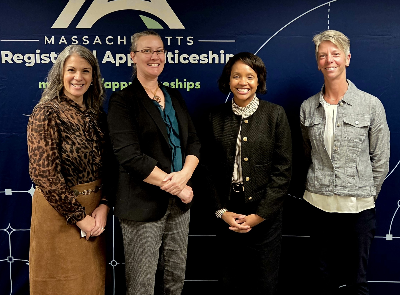
“MHA is grateful for these much-needed investments from the Healey-Driscoll administration and our partnership with Hamilton-Ryker in securing funds to train workers in high-need areas,” said Amy Smalarz, executive director of MHA’s Center for Healthcare Education & Professional Development, who coordinated MHA’s effort along with MHA’s Director of Workforce and Clinical Affairs Kim Stevenson. “The recent funding builds upon our efforts and the efforts of our members to strengthen the healthcare workforce even at a time of immense financial challenges facing all hospitals and health systems.”
In May of this year, the Executive Office of Health and Human Services awarded $240,000 in grants to launch nursing apprenticeships across Massachusetts. The Nursing Council on Workforce Sustainability in partnership with the Executive Office of Labor and Workforce Development’s Division of Apprentice Standards will implement the program expected to launch in early 2027.
The grants supported partnerships between public colleges and healthcare organizations to develop licensed practical nurse and registered nurse apprenticeship programs. Grant recipients include Chelsea Jewish Lifecare – Bunker Hill Community College; Duffy Health Center – Cape Cod Community College; Mass General Brigham – Greenfield Community College; and Mass General Brigham Spaulding Rehabilitation Hospital – Roxbury Community College.
Massachusetts continues to face significant nursing workforce challenges, including persistent vacancies across acute, post-acute and community-based settings. At the same time, qualified nursing school applicants are frequently turned away due to limited program capacity, clinical placement constraints, and faculty shortages.
The Massachusetts Healthy Work Environment (HWE) Academy
Massachusetts’ statewide Healthy Work Environment (HWE) Academy – an initiative born out of MHA’s Workforce Leadership Task Force – empowers frontline nursing teams to lead sustainable improvements in workplace culture, nurse retention, and patient outcomes.
A year following the program’s launch, solutions created through the Healthy Work Environment Academy are now reaching care units across the commonwealth – improving the healthcare experience for caregivers and patients alike.
The HWE Academy is part of a broader initiative that the MHA Board of Trustees approved in early 2025 to make the commonwealth a leader in healthy and innovative work environments for nurses and care teams. Through the initiative, hospitals commit to adopting one evidence-based program to support frontline professionals, with the Academy serving as one opportunity for participation.
During the HWE Academy’s intensive year-long process, each participating hospital identifies a unit nursing team to address a specific on-the-job challenge that is hindering their ability to work at their best. Using a series of in-person and virtual workshops, the teams design, implement, and sustain projects to address that challenge. They have access to educational sessions and expert mentoring throughout their journey and are offered “train the trainer” resources to help scale their projects to other units in their organizations.
The initial cohort of 10 hospitals, coordinated through MHA, worked with the American Association of Critical-Care Nurses (AACN) and participated in its Clinical Scene Investigator (CSI) Academy’s Nursing Workforce Solutions program. Johnson & Johnson provided financial support at no cost to the cohort. The second cohort of 10 hospitals is now underway. Due to the tremendous results from the first cohort, MHA is underwriting the costs of cohort 2.
Cohort 1 consisted of Baystate Wing Hospital, Beth Israel Deaconess Medical Center, Berkshire Medical Center, Boston Medical Center, Cape Cod Healthcare, Holyoke Medical Center, Newton-Wellesley Hospital, Tufts Medical Center, Spaulding Rehabilitation Hospital Boston, and Sturdy Health. Cohort 2 includes Beth Israel Deaconess Medical Center, Beverly Hospital, Cambridge Health Alliance, Cooley Dickenson Hospital, Emerson Health, Fairview Hospital, Lowell General Hospital, New England Baptist Hospital, UMass Memorial Health – Milford Regional Medical Center, and UMass Memorial Medical Center. AACN is currently accepting applications for another cohort of hospitals to go through the CSI Academy’s Nursing Workforce Solutions program, funded again by Johnson & Johnson, and MHA has connected with all Massachusetts chief nursing officers to encourage them to apply.
Monday Report will feature a few of the projects undertaken by nursing teams across the state that are now making a tangible difference in the daily lives of workers and the patients in their care.

HMC’s Medical Telemetry Unit: “Scale It. Nail It.”
To create a more balanced workload for nurses, the team at Holyoke Medical Center (HMC) created the Nursing Acuity Tool – a data-driven workforce optimization solution that aims to improve patient care and prevent nurse burnout by aligning assignments with real-time patient acuity rather than just traditional census.
The tool uses clinical data – such as diagnosis complexity, medication frequency, mobility needs, and level of monitoring – to generate an objective acuity score for each patient. These scores are then used to assign work based on total workload demand rather than room geography alone, ensuring fairness and transparency across the care team. Further, real-time information enables charge nurses and leaders to make informed decisions regarding staffing when workload thresholds are met.
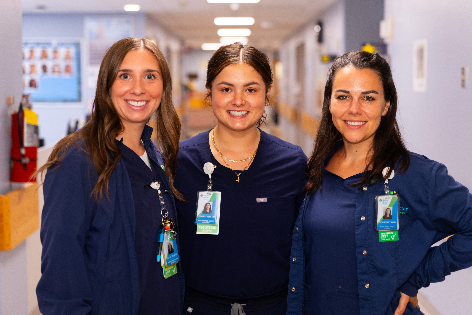
“As nurses, we have each seen firsthand how unbalanced assignments can impact both nurses and the patients we care for. This project allowed us to turn those experiences into a solution that promotes fairness and strengthens teamwork and communication, while supporting safer patient care. To us, this tool became more than just a way to balance assignments. It became a way to ensure nurses’ voices are heard, high-acuity assignments are recognized, and nurses have the support they need when caring for patients with complex diagnoses. By creating a more equitable distribution of high-acuity patients, we can better support one another and ultimately provide the best possible care for our patients.”
– HMC Clinical Scene Investigator Academy Participants (left to right) Kailey King, R.N.; Celina Rios, R.N.; and Courtney Letendre, R.N.
By aligning nursing workload with the complexity and intensity of patient needs, the tool optimizes patient care delivery. Balanced assignments of high-risk or high-demand patients prevent the situation where one nurse has a heavier assignment compared to another, ensuring consistent monitoring, timely medication administration, and earlier intervention when conditions change. Balanced and flexible assignments – driven directly by internal input on an ongoing basis – can help improve patient outcomes, reduce errors, and allow nurses to dedicate meaningful time to assessment, education, and care coordination.
The tool also directly addresses key drivers of nurse burnout. For the HMC team, moving beyond geography-based assignments ensures that no individual nurse consistently carries a disproportionate share of high-acuity patients. This equitable approach reduces physical fatigue, cognitive overload, and moral distress, fostering a healthier work environment where nurses feel supported, valued, and better equipped to provide safe, high-quality care.
HMC says that since implementing the tool, it has noticed increased unit teamwork and communication among staff. The team that created the initiative is seen as a resource for other units throughout the hospital and reports that there is potential for other units to adopt the tool.
Beware of Recruitment Fraud
The public, especially young people lured by the idea of getting a meaningful, good paying job in healthcare, are increasingly falling prey to “recruitment fraud” – the practice of offering bogus jobs on legitimate job boards, or creating a fraudulent website to lure applicants.
Unsuspecting applicants ultimately provide addresses, personal information such as visa forms or W-9s, or even “application fees,” which leads to identity theft and financial losses.
Some large systems across the U.S., such as UNC Health in North Carolina and Baylor, Scott & White in Texas, have posted recruitment warning on their websites, as have companies like Boston Scientific headquartered in Marlborough, Mass.
Hospitals and other employers across the U.S. in various fields have instituted strict protocols in the hiring of remote IT personnel. The heightened oversight follows a recent case in which the identities of legitimate and qualified IT personnel were compromised by bad actors from North Korea and other areas, who then used the bogus identities to land remote jobs that gave them free access to company computer systems. The FBI has issued warnings about such activity.
If you suspect a scam is occurring, contact the Massachusetts Attorney General’s Consumer Complaint Form or call the AG’s Consumer Hotline at (617) 727-8400. Or file a report at the Federal Trade Commission.